
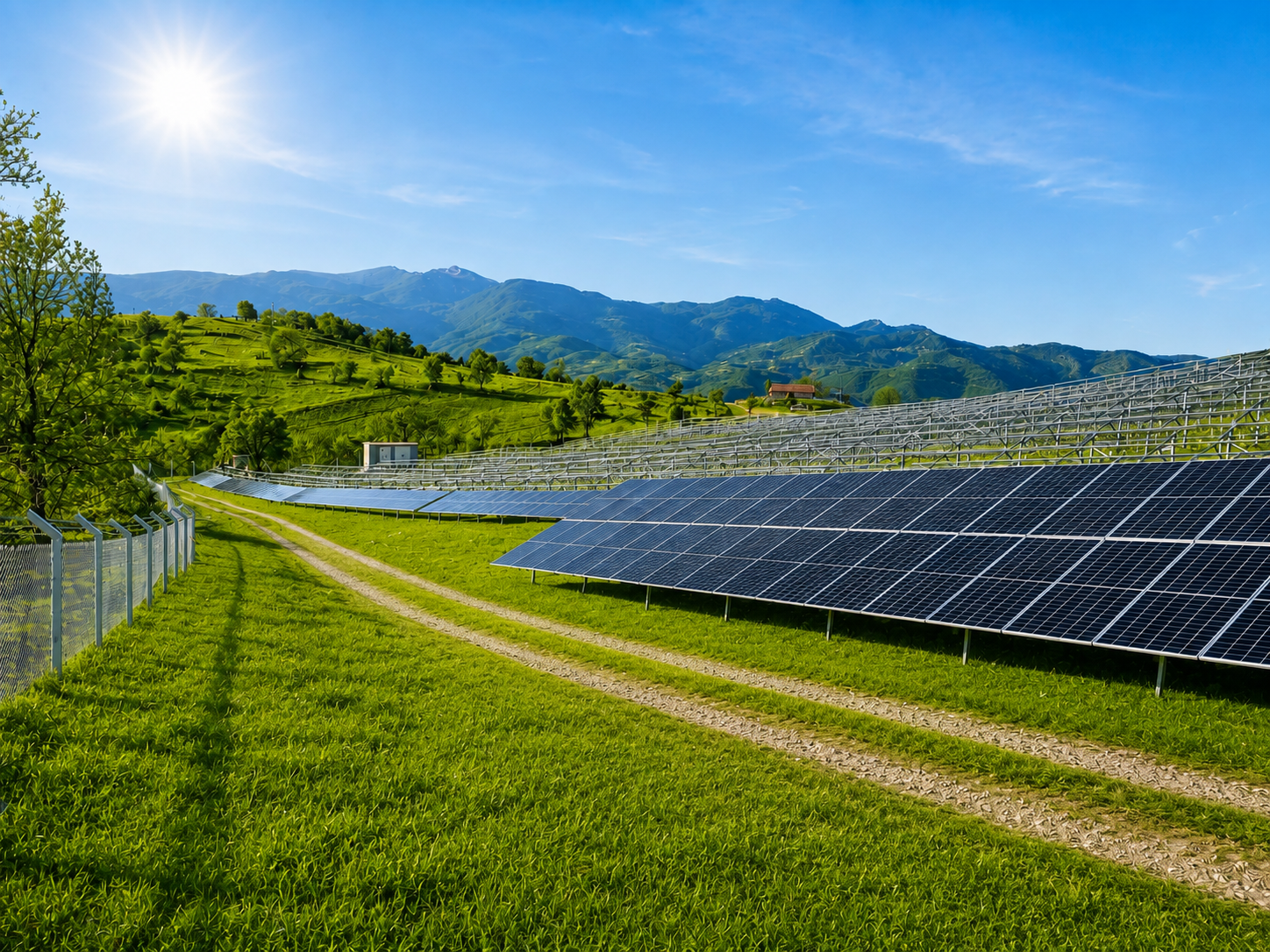
Choosing high-quality solar panels is only one part of building an efficient and long-lasting solar energy system. The structures that securely support and position those panels are equally important. Solar mounting systems are therefore among the key structural components of photovoltaic installations.
A solar mounting system consists of structural profiles, supports, fasteners and complementary components used to secure photovoltaic panels to the ground, roofs, car parks or other surfaces. Factors such as project location, ground conditions, wind and snow loads, panel dimensions and installation type directly influence the design of the solar structure.
In this guide, we explain what solar mounting systems are, the main types of mounting structures, important design considerations and why choosing the right mounting solution is essential for photovoltaic projects.
What Is a Solar Mounting System?
A solar mounting system is the supporting structure used to securely install photovoltaic panels on a specific surface. In addition to supporting the panels, the structure helps position them at the required orientation and inclination.
A typical PV mounting system may include structural profiles, posts, purlins, clamps, bolts, nuts, connection plates and other components depending on the project design.
The objective is to support the solar panels safely throughout the project lifetime while providing resistance against environmental loads and enabling efficient installation.
Why Are Solar Panel Mounting Systems Important?
Solar panels are designed for long-term outdoor operation. Their supporting structures must therefore withstand environmental conditions such as wind, rain, snow, temperature variations and corrosion.
A properly designed solar panel mounting system can help:
- Secure photovoltaic panels safely,
- Provide resistance against wind and snow loads,
- Position panels at the appropriate inclination,
- Reduce installation time,
- Simplify maintenance operations,
- Support long service life,
- Improve the overall reliability of the PV installation.
What Are the Main Types of Solar Mounting Systems?
The mounting solution used in a photovoltaic project depends primarily on where the panels will be installed. The most common solutions include ground-mounted solar systems, rooftop mounting systems and solar carport structures.
1. Ground-Mounted Solar Systems
Ground-mounted solar mounting systems are commonly used for photovoltaic power plants installed on open land. They are particularly suitable for utility-scale and large commercial solar projects.
The method used to connect the structure to the ground depends on soil characteristics, structural calculations and project requirements.
One common solution is the driven pile solar mounting system. In suitable ground conditions, steel profiles are driven directly into the soil using specialized equipment, potentially enabling fast and efficient installation.
Alternative foundation solutions can be considered where ground conditions are not suitable for driven profiles.
2. Flat Roof Solar Mounting Systems
Large flat roofs on factories, warehouses, shopping centers and commercial buildings provide valuable areas for photovoltaic installations.
Flat roof solar mounting systems position the panels at the required inclination while distributing loads across the roof structure. Depending on project requirements, mechanically fixed or appropriately engineered ballasted solutions may be used.
Roof load capacity, wind forces, drainage points and protection of the existing roof surface should all be considered during system design.
3. Pitched Roof Solar Mounting Systems
Pitched roof solar mounting systems can be used on residential, commercial and industrial buildings.
The mounting solution varies depending on whether the roof is constructed with trapezoidal sheet metal, tiles or another roofing system. The main objective is to securely attach the photovoltaic panels while protecting the existing roof structure.
4. Solar Carport Systems
A solar carport is a mounting structure designed to install photovoltaic panels above vehicle parking areas. It allows the same space to function both as a parking area and as a renewable energy generation facility.
Solar carports can be particularly suitable for factories, shopping centers, office buildings, hotels, municipalities and large parking facilities.
As electric vehicle adoption increases, solar carport systems can also be integrated with EV charging stations, combining renewable energy generation with electric mobility infrastructure.
What Types of Profiles Are Used in Solar Mounting Systems?
Different steel profile geometries can be used in solar mounting structures depending on the structural design and project requirements.
Roll-formed C and U profiles are among the solutions commonly used in photovoltaic supporting structures.
Roll forming technology allows long structural profiles to be manufactured with repeatable dimensions and customized cross-sectional geometries suitable for high-volume production.
Important profile characteristics include:
- Cross-sectional geometry,
- Material grade,
- Material thickness,
- Hole and connection details,
- Surface protection.
These characteristics should be determined according to the engineering requirements of each photovoltaic project.
Corrosion Protection in Solar Mounting Systems
Solar mounting structures remain exposed to outdoor conditions for many years. Rain, humidity, snow, temperature variations and environmental conditions can create corrosion risks for metallic components.
For this reason, steel components used in solar structures should have an appropriate corrosion protection system. Depending on project requirements and environmental conditions, galvanized materials or alternative protective coatings may be selected.
Choosing the right material and surface protection solution can directly affect the service life of the solar mounting system and its long-term maintenance requirements.
Why Are Wind and Snow Loads Important?
Because photovoltaic panels have relatively large surface areas, wind forces can create significant loads on the mounting structure. Snow accumulation can also increase structural loads in regions with heavy snowfall.
A professional solar mounting structure design should therefore consider the environmental conditions of the project location.
Wind loads, snow loads, ground conditions, mounting height, panel arrangement and structural geometry should be evaluated together during the engineering process.
Instead of simply increasing profile thickness, the complete system should be engineered and optimized as an integrated structural solution.
How Is the Solar Panel Tilt Angle Determined?
The inclination of photovoltaic panels is one of the factors that influences energy generation performance. Geographic location, solar irradiation, panel arrangement, row spacing and site characteristics are considered when determining the appropriate panel tilt angle.
For ground-mounted systems, the selected inclination directly affects the supporting structure. On rooftops, the existing roof pitch and structural characteristics must also be considered.
The Importance of Fasteners in Solar Mounting Systems
The reliability of a solar mounting system depends on more than its primary structural profiles. Bolts, nuts, clamps, connection plates and other fastening components also play essential roles.
Fasteners should be manufactured from appropriate materials, meet the required mechanical properties and be correctly installed during assembly.
Well-designed connection systems can also simplify field installation and contribute to shorter installation times, particularly in large-scale photovoltaic projects.
What Should Be Considered When Choosing a Solar Mounting System?
Every photovoltaic project has different requirements. Therefore, a single mounting solution cannot be considered suitable for every installation.
Important factors include:
- PV project capacity,
- Ground or roof characteristics,
- Soil conditions,
- Solar panel dimensions and weight,
- Wind and snow loads,
- Material and profile specifications,
- Corrosion conditions,
- Ease of installation,
- Project schedule,
- Maintenance and operational requirements.
What Does the Right Solar Mounting System Add to a PV Project?
Solar mounting systems should not be considered merely as structural accessories within a photovoltaic project. Their design can affect installation time, field labor, structural safety, maintenance requirements and the long-term reliability of the installation.
For large-scale photovoltaic projects in particular, structures that can be efficiently manufactured, transported and assembled on site can provide important advantages for project planning and execution.
Advantages of Roll-Formed Profiles for Solar Mounting Systems
Roll forming technology is an efficient manufacturing method for producing solar structural profiles with consistent dimensions and repeatable cross-sectional geometries.
C profiles, U profiles and customized sections can be manufactured according to project requirements. Optimizing the profile geometry can contribute to both structural performance and efficient use of material.
Controlling dimensional tolerances, hole positioning and profile geometry throughout production can also support more efficient and consistent installation on site.
Quality Control in Solar Mounting System Manufacturing
Structural components used in photovoltaic projects should be subject to appropriate quality control procedures during manufacturing.
Profile dimensions, material specifications, surface condition, connection points and manufacturing tolerances should be monitored according to project requirements.
Quality processes applied from production through shipment can contribute to reliable and efficient installation of solar mounting structures in the field.
BEKSAN Solar Mounting Systems
BEKSAN Solar Mounting Systems provides structural profile and mounting solutions for photovoltaic projects. With roll forming manufacturing capabilities, solutions can be developed for ground-mounted, rooftop and other solar applications.
Determining appropriate profile geometries, managing manufacturing processes and applying quality control procedures are important steps in developing reliable and practical solar mounting solutions.
For more information about solar mounting systems, PV structures, C/U profiles and solar panel supporting systems for your photovoltaic project, contact BEKSAN Solar Mounting Systems.